November RBA Meeting

November RBA Meeting
The RBA increased the cash rate by a further 25 basis points to 4.85% at its November meeting, marking the fifth increase this year. The decision was split, with six Board members voting in favour and three preferring to leave rates unchanged. Governor Michele Bullock made clear that the latest increase was primarily a response to domestic capacity constraints, rather than simply the inflationary effects of higher global energy prices.
The RBA materially revised its inflation outlook higher, with underlying inflation now expected to remain above 3% until late 2027. While higher fuel prices associated with the Middle East conflict have contributed to headline inflation, the Bank's greater concern is the persistence of domestically generated price pressures, particularly across labour-intensive services. Elevated public spending, strong AI-related investment and weak productivity growth are adding to demand for already constrained labour and materials, limiting the economy's capacity to absorb additional spending without generating inflation.
Although Bullock avoided directly criticising government spending, the RBA's assessment adds to growing scrutiny of fiscal policy, with government expenditure now at its highest share of GDP in four decades outside the pandemic. This also highlights an increasingly apparent divergence between the Government's emphasis on global inflationary pressures and the RBA's focus on domestic demand and capacity constraints, placing further pressure on Treasurer Jim Chalmers ahead of December's mid-year budget update.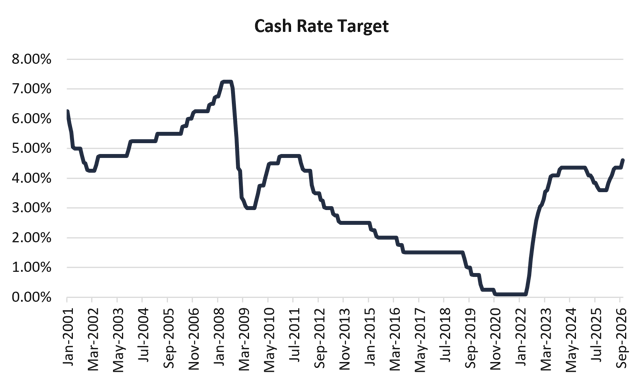
The deterioration in the inflation outlook comes alongside a weakening economic growth profile. Household consumption and dwelling investment forecasts have been revised lower, while businesses face margin pressure from higher labour, energy and input costs. Housing conditions have also weakened more sharply than anticipated, with dwelling prices falling almost 5% from their March peak. The RBA noted that changes to negative gearing and capital gains tax arrangements have amplified the effects of monetary tightening, while government spending is forecast to grow 3.8% this financial year, more than twice the expected rate of economic growth.
Bullock's suggestion that the Board would take stock of incoming data indicates a more measured approach to further hikes following five increases this year. Markets subsequently reduced the probability of another increase by February 2027 from approximately 50% to 30%. Nevertheless, persistent domestic inflation and weak productivity growth suggest monetary conditions will remain restrictive for an extended period.
Source: Reserve Bank of Australia, Statement by the Monetary Policy Board: Monetary Policy Decision, November 2026.
.