PRIVATE WEALTH
Monthly Forex Outlook - April 2026
Global markets are reeling from the US-Israel-Iran war, with surging energy prices, weakening currencies, and growing recession fears dominating the...
On 9 August 1965, Lee Kuan Yew went on television and wept. Singapore had just been expelled from Malaysia. A city of under two million people, with no natural resources, no hinterland, and its water piped in from a neighbour that no longer wanted the merger, was suddenly on its own. GDP per capita sat at roughly US$500 — level with Mexico, behind most of the region.¹
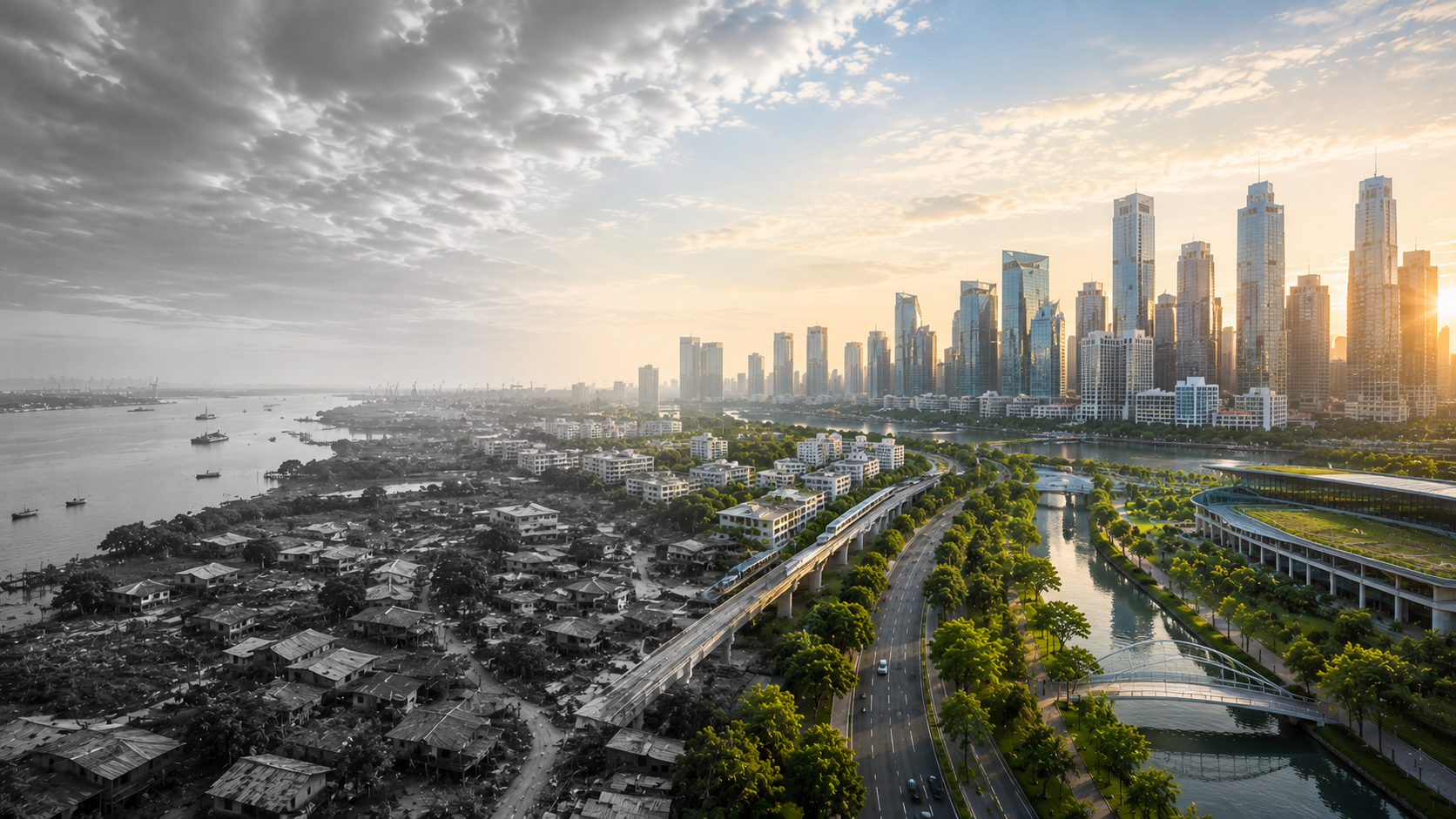
Sixty years on, that same island’s economy is forecast to post the world’s 8th-highest GDP per capita in 2026, at roughly US$107,800 (IMF projections, nominal) — ahead of the United States (~US$94,400), Australia (~US$75,600) and the United Kingdom (~US$61,100).² It still has zero natural resources. It still imports its sand, and still relies on imports from Malaysia for a portion of its water. And in 2016, Aura Group moved its headquarters there, making an educated gamble on the country and the region.
This is the third instalment in my Outliers series, following Korea (“K-Pop to Conglomerates”) and Australia (“Truly Lucky?”). Korea had war and industrial policy. Australia had a continent of iron ore and a fortunate postcode. Singapore had neither. What it had was a plan — and sixty years of not deviating from it.
Singapore ranked 3rd out of 182 countries in Transparency International’s 2025 Corruption Perceptions Index, with a score of 84 — first in Asia-Pacific, and one of the least corrupt jurisdictions on earth.³
That isn’t a cultural accident. It’s policy, dating back to Lee Kuan Yew’s founding insight: underpaid civil servants become corrupt civil servants. Singapore’s answer was to pay ministers like they were running a business — because they are. The Prime Minister earns S$2.2m a year; an entry-level cabinet minister S$1.1m, pegged at a 40% discount to the median income of the country’s top 1,000 private-sector earners, a formula unchanged since 2012 and currently under independent review.⁴
It looks expensive on a payroll. It’s cheap next to the alternative — a civil service that extracts rent from every permit, tender and court filing, which is how most economies actually lose money.
Singapore ranked 6th globally on the 2025 Global Peace Index — 1st in Asia — and recorded just under 21,000 physical crime cases in 2025, across a country of nearly six million people.5
The toolkit is blunt by Western standards. Vandalism carries mandatory caning — three to eight strokes, automatic for anything like spray paint — on top of fines and up to three years in prison. Trafficking drugs above set thresholds (as little as 15 grams of heroin, 30 grams of cocaine) carries a mandatory death sentence, no judicial discretion. ⁶
Then there’s the chewing gum. Banned outright since 1992, after vandals started sticking it on MRT door sensors and jamming the transit network Singapore had just spent a decade and billions of dollars building — medicinal and dental gum has been legal since 2004, but only through a pharmacist, with records kept. Importing the ordinary kind still carries fines and, technically, a prison term.⁷ It sounds absurd until you register the logic: a S$5 packet of gum was disrupting critical infrastructure, so the state legislated the disruption away rather than treat it as the cost of running a big city.
The result isn’t just a low crime rate — it’s a predictable one. Punishment is certain, publicised, and applied with little discretion, which does more for deterrence than severity alone. The safety this delivers is one of my most important considerations in basing myself here as a father with a young family.
Changi Airport has been named the World’s Best Airport by Skytrax 14 times since the awards began in 2000 — a record — including back-to-back wins in 2025 and 2026, plus best-in-Asia, best dining and best immigration honours.8
For a country with no domestic market to speak of, being the best-connected hub in the region isn’t a nice-to-have — it’s the business model. Aviation, ports and logistics have been run as strategic infrastructure since the 1980s, not amenities.
Singapore’s home ownership rate sits above 90% — among the highest in the world. Roughly 77% of residents live in HDB public housing, the vast majority owner-occupied on 99-year leases, funded through the Central Provident Fund (CPF) — a compulsory savings scheme dating to 1955 that was later repurposed to let citizens draw down retirement savings to buy their own flat.9
| Country | Home Ownership Rate |
| Singapore | ~90%+ |
| Australia | ~67% |
| United States | ~66% |
| United Kingdom | ~66% |
| Germany | ~47% |
| Switzerland | ~42% |
| Hong Kong | ~37% |
Source: national statistical agencies, compiled 2025.10
The irony writes itself: Singapore is nicknamed the Switzerland of Asia for its financial stability, yet a higher share of Singaporeans own their homes than actual Swiss citizens do — and more than Australians too.
Singapore carries no net debt and holds a AAA rating from all three major agencies. But it does borrow — it just doesn’t spend the proceeds. The government issues securities to develop the local bond market and meet CPF investment needs; by law, it invests the proceeds, not spends them. Infrastructure debt, raised under the Significant Infrastructure Government Loan Act, funds MRT lines and the like, ring-fenced from the operating budget. The constitution requires a balanced budget over each term of government.11
Those reserves are put to work by two of the largest sovereign investors on earth: Temasek, with a net portfolio of S$434bn (~US$339bn) as of March 2025, and GIC, whose size is deliberately never disclosed — officially, because publishing it would hand currency speculators a target during a crisis. Independent trackers estimate GIC at roughly US$800bn, which would rank it among the ten largest sovereign wealth funds in the world.12 Under the Net Investment Returns Contribution rule, the government can spend up to 50% of the expected long-term return on these reserves each year — the rest compounds, untouched.13
For two funds of that scale to exist — and to be run as a compounding machine rather than a piggy bank — for a country of under six million people, is itself the outlier.
Singapore has reclaimed enough land to grow roughly a quarter larger than it was at independence, importing sand from neighbours who have since restricted or banned its export.14. Water security runs on the “Four National Taps” strategy — local catchment, imported water, recycled NEWater and desalination — a deliberate, decades-long programme to reduce dependence on a water agreement with Malaysia that doesn’t expire until 2061, well before that date becomes a problem.
Even the parts of the map you can’t legislate, Singapore has treated as a multi-decade infrastructure project.
Singapore ranks 4th globally in the Global Financial Centres Index (September 2025), behind only New York, London and Hong Kong.15 It runs on English common law, a judiciary rated among the most trusted in the world, and the Singapore International Arbitration Centre as the region’s dispute-resolution venue of choice.
The family office numbers tell the story of what that trust is worth. In my February 2024 piece, The Rise of Family Offices, I noted Singapore had around 1,100 single-family offices — 59% of the total in Asia. That number crossed 2,000 by the end of 2024, and the latest parliamentary reply confirms it is still running above 2,000 as of end-December 2025 — the most current official figure available.16 The framework has matured rather than kept multiplying, but the base itself is now roughly double what I flagged less than two years ago.
What’s driving it isn’t secrecy — it’s substance. Singapore’s 13O and 13U tax incentive schemes exempt qualifying funds from tax on specified income, but only in exchange for the real thing: minimum assets under management, local hires, local spending. That is precisely why these structures are displacing BVI and Cayman vehicles rather than replicating them. As global tax-transparency regimes — CRS, FATCA, BEPS — squeeze pure “brass-plate” jurisdictions that offer secrecy without substance, Singapore offers substance with just enough tax efficiency to matter.
The Variable Capital Company (VCC), launched in January 2020, best expresses this. Aura was an early mover here — we incorporated our first master VCC in 2021, within a year of the regime opening, while many global managers were still watching from the sidelines. By the most recently published data (2024), over 1,000 VCCs had been registered with ACRA, spanning close to 2,000 sub-funds and managed by 544 licensed fund managers.17 The structure was purpose-built to let managers re-domicile funds out of offshore centres into a jurisdiction with real courts, a full tax-treaty network and no capital gains tax — without losing the flexibility that made Cayman attractive in the first place.
Aura Group was founded in Sydney in 2008, in the depths of the Global Financial Crisis. In 2015, we incorporated Aura Group (Singapore) Pte Ltd, became a Registered Fund Management Company under MAS in 2016, and became a full Capital Markets Services licensee in 2021. Singapore is now our global headquarters, home to roughly half of our team and nearly half of our funds under management.
We didn’t move for the tax rate. We moved because of the long-term thinking and the neighbourhood — Vietnam, Indonesia, the Philippines — is where the next decade of growth in Southeast Asia is actually going to happen. As I argued in Why Southeast Asia is not China, this region’s major economies are forecast to cross the US$10,000 GDP-per-capita threshold within a decade, and that makes it a fertile hunting ground for uncorrelated investment opportunities.
From our Singapore base, Aura provides:
Every one of these outcomes — the incorruptible civil service, the airport, the home ownership rate, the balance sheet, the reclaimed coastline, the family office boom — traces back to the same discipline: decide the multi-decade outcome first, then build the institution that makes short-term deviation costly. Singapore didn’t get lucky. It just never stopped compounding.
Until next month,
Calvin Ng
Managing Director
Sources
1. Singapore's 1965 starting point (GDP per capita, resources, population) — spacedaily.com
2. GDP per capita by country, 2026 IMF projections (nominal) — worldometers.info
3. Corruption Perceptions Index 2025 — Singapore 3rd globally — cpib.gov.sg
4. Singapore ministerial salary framework — smartwealth.sg
5. Singapore ranked 6th on the 2025 Global Peace Index, 1st in Asia — timeout.com
6. Singapore's tough crime laws — caning, mandatory death penalty for drug trafficking — and 2025 crime statistics — legalclarity.org
7. Chewing gum sales ban in Singapore — history and 2004 exceptions — Wikipedia
8. Changi Airport named World's Best Airport 14th time, Skytrax — malaymail.com
9. HDB Key Statistics 2024/2025 and housing/household data — smartwealth.sg
10. Home ownership rate by country, 2025 ranking (Singapore, US, UK, Germany, Switzerland, Hong Kong) — ceoworld.biz
10. Australia home ownership rate (2021 Census) — aihw.gov.au
11. Ministry of Finance Singapore — Our Assets and Liabilities — mof.gov.sg
12 Temasek net portfolio value, March 2025 — Temasek Holdings — Wikipedia
12. GIC estimated AUM, independent sovereign wealth fund tracker — altss.com
13. Ministry of Finance Singapore — Net Investment Returns Contribution — mof.gov.sg
14. Singapore's land growth since 1965 through reclamation — spacedaily.com
15. Global Financial Centres Index 38, September 2025 — Singapore ranked 4th — seasia.co
16. Singapore confirms over 2,000 tax-incentivised Single Family Offices as of end-December 2025 — opalesque.com
17. Singapore's VCC framework — registration statistics and Aura Group commentary — aura.co
Global markets are reeling from the US-Israel-Iran war, with surging energy prices, weakening currencies, and growing recession fears dominating the...
In 2024, notable portfolio reallocations were observed from cash to fixed income, as well as to public equity and PE, with 43% of family offices...
Join us for a conversation with Will from Shippit about their journey to revolutionise the logistics industry.
Subscribe to News & Insights to stay up to date with all things Aura Group.